Showing posts with label technology. Show all posts

Sunday, 23 August 2009

Science or Pornography?

New Scientist has a video taken of a couple in an MRI scanner … well … coupling. This is obviously somewhat explicit, although probably safe for work, as someone would have to look closely or know what they were seeing to be offended. However it isn’t exactly erotic. Well, I suppose someone will find it so, it takes all sorts.

Stumble Upon Toolbar

Saturday, 15 August 2009

Geeky but Utterly Awe-Inspiring

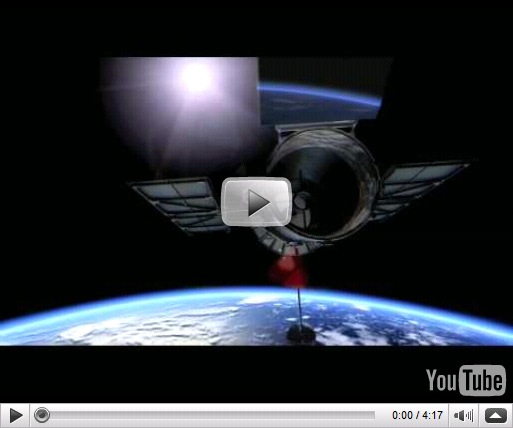
I hope you guys will forgive me for an (almost) politics-free post, but I have not written about science in a while. Although rather geeky this is way cool.

I do have to hat-tip Ann Althouse, who was using it for wry political satire.

Stumble Upon Toolbar

Saturday, 25 July 2009

Copyright and Licensing in the Modern World

All property rights are important for freedom, and in that I include the right to the benefits of creative endeavour, tangible or otherwise. However the holders of copyrights and their intermediaries need to start understanding not only those laws but how to effectively manage licensing in a world of instant global communication where communities might be spread over the world.

I have noticed disparate cases, all with the common themes of licensing management and technological development. Sometimes the licences are behind the times, others someone is trying to get ahead, but at odds with the consensus of their customers.

At least Amazon apologised and agreed to change practices for the future when they failed to understand people’s feelings about copyright, and even apparently their own user agreement. They should treat new media like old – you buy it it’s yours. If it wasn’t there’s to sell that is Amazon’s problem. The latter is critical to Amazon’s future in the new medium of electronic books.

The case that triggered this post was Associated Press announcing a crackdown on unpaid use of its articles on the internet.

The first problem with this is that they have no right to do so, or at least not to the degree the AP intends. Leaving that aside, the AP just seems not to understand the modern world. Hot Air, where I found the story, calls it “…the fast track to AP irrelevance”. If Tom Curley (AP’s President and CEO) thinks this then I reckon Hot Air has a point:

“If someone can build multibillion-dollar businesses out of keywords, we can build multihundred-million businesses out of headlines, and we’re going to do that,” Mr. Curley said. The goal, he said, was not to have less use of the news articles, but to be paid for any use”

In my less-than-humble opinion he is deluded. We shall see.

People will just be fed up of AP. They don’t play nicely people won’t want to play with them. It is they who will lose. AP has not understood the modern world, let alone anticipated the future.

This is an increasingly noticeable phenomenon. Large businesses run by people isolated from the real world make licensing decisions that fail to take account of modern reality. In many cases they then complain when they lose money. A letter in the Telegraph last month signed by representatives of copyright holders demanded stricter enforcement of laws. I managed to get a reply published, but they edited out my main point, that the copyright holders are themselves to blame if they abuse their monopoly when making license agreements that don’t take into account the modern world.

When internet music download came about the licensed sites lagged far behind the illegal sites. At the same time CDs were overpriced. The price of an album went up when CD replaced tape and vinyl, although the manufacturing and distribution costs were in fact lower. Of course people then stole the music. When paid download finally arrived the cost varied depending on where the recipient was, by IP address. Of course people felt cheated, and some either bought from foreign sites anyway (via a proxy say) or simply carried on using illegal sites.

The latest ridiculous anachronism in licensing is on internet TV, and mirrors the region-code cock-up that is DVD. The internet is international. There are no borders. I have friends in the USA, Australia, New Zealand, Hong Kong, Denmark, Greenland, Norway among others who might be recommending ideas, sharing favourites with me. 35% of my traffic here comes from the USA, a similar proportion of my blog-reading time is probably spent on US sites. So why does Hulu, the internet TV site, give me this message when I try to watch Family Guy?

image

This is a fundamental misunderstanding of the nature of the internet. Why are licensing rights on the internet still sold in such a piecemeal way? That alongside the regional codes on DVD are driving the bit torrent phenomenon.

There will always be problems with copyright that crop up as technology develops. Globalisation caused the Amazon Kindle problem, where a work is no longer copyright in some jurisdictions. However such problems need to be addressed with reference to reality, not some idealised world with no pirating. I can see no excuse for major production companies, record producers and publishers not to negotiate world rights to material that is still copyright in all major markets, and charges that roughly correspond over those markets. If they refuse to do so they can hardly be surprised if people circumvent their restrictions.

Associated Press is likely to resolve its own case, as it either backs off its stated intentions or fades away, being ignored.

Stumble Upon Toolbar

Monday, 20 July 2009

Update on the Apocalypse

This update is just really to explain why I wrote the previous post (apart from the fact that I enjoy such little scratch calculations), about EMP attack concerns, how it fits in with my general theme of scepticism. It is in a new post as it got a bit long.

Dr Forstchen’s PhD is not in any science. He is a professor of history (lecturer as we might say in the UK, I don’t know if he is as senior as what we would call a professor) and an author. He has researched this topic for several years according to the potted biography in the article for his book “One Second After”. Apparently the book has been cited in US Congress as a realistic portrayal of the after-effects of an EMP weapon.

Yet not only do I think he got the magnitude of the effect wrong, in the article he makes basic errors, some of which I identify below.

This article is more hype than science, like most catastrophism including more popular recent themes like global warming and population catastrophe. It is a man who has no doubts, and I suspect has hunted out evidence for a catastrophe he knows is going to happen, rather than first questioning whether it could happen.

It took me maybe 20 minutes to come up with a realistic mean energy density in Dr Forstchen’s scenario, yet in his four years of research he appears not to have tried to find out how power is defined and measured, let alone checked that a nuclear detonation from a third-world bomb would have the energy to do the damage he claims.

He compares the production of EMP to a pebble rolling, hitting a larger one, in turn starting off larger ones to start an avalanche. That is a ridiculous analogy, even ignoring the fact that an avalanche is snow. If a pebble starts a rock fall or land slip the energy comes from the act of gravity on each rock, it is not all contained in the original pebble. No source of energy for the EMP other than the nuclear explosion is suggested.

He talks about “… power that could range up to hundreds of amps per square yard …” but not only are amps per square yard not a measure of power, it is a largely meaningless measure. It certainly will not tell you that damage will be caused to anything but sensitive, unshielded electronics. Even then a lot more needs explaining as to what medium these large currents are running in, because given the same EMP a much higher current will be produced in metal than in topsoil, let alone rock or concrete.

“a high tension wire miles long will absorb tens of thousands of amps”, but cables don’t absorb current, they transmit it. Again a meaningless statement.

“All electricity travels, of course, at the speed of light”, no it doesn’t. I remember at university calculating the speed of a wave in a co-axial cable. That did turn out to be c, the speed of light in free space. In other media it travels at different speeds, and speed can depend on frequency of AC, which an EMP would produce.

I am not sure how “hundreds of amps per square yard … will not affect you directly, at most you'll feel a slight tingling …”. Let us say a large person is facing the current direction, sectional area maybe a square yard. They have hundreds of amps flowing through them! I am not sure how the good professor ever thought that something that fried all electronics, even the shielded ones in a car or an electrical substation 1500 miles away, wouldn’t hurt at least some of the people 300 miles below, who were receiving 25 times the power.

“Commercial airliners today are all computer driven … When the pilot pulls back on the "stick" it is no longer connect by wires stretching all the way back to the tail and the elevator assembly. Instead, his motion is read by a computer which sends a signal to an electrical servo - motor in the tail, which then moves the tail” would surprise Boeing, and in fact all Boeing pilots, many of whom like the fact that they are not fly-by-wire. Of course no commercial airliner has controls connected by wire, or has for decades. This man is a pilot, and doesn’t know that?

By the way I reckon some aircraft might have a problem. However I have flown through storms, and been hit by lightning and not even known until the engineer identified the notch on the flap as lightning damage. Metal, as Dr Forstchen says, takes most of the current. The present generation of passenger aircraft are still primarily made of metal. That generally protects the electronics, and would certainly provide some cover from an EMP.

Stumble Upon Toolbar

Sunday, 19 July 2009

Catastrophe Postponed?

“An EMP attack … only requires but one nuclear weapon, detonated 300 miles above the middle of the United States. One bomb.”

The Silver Bear Cafe has an article by William R. Forstchen, PhD on electromagnetic pulse (EMP) threat to the USA. If you don’t know what EMP is then watch Goldeneye, but basically it is a sharp pulse of electromagnetic energy that damages electronics. A widespread EMP can be caused by detonating a nuclear weapon in the lower reaches of space, and the article suggests that is a real threat, and that a single bomb exploded a three hundred miles above the USA would effectively wipe out the country.

That seemed a little pessimistic to me, so I did a quick Ask Jeeves calculation. I looked up the energy in TNT, a little over 4kJ per gramme, multiplied to a million tonnes to give the blast energy of a one megaton bomb (i.e. a big one) being about 4 million gigajoules. However that is the thermodynamic blast energy, and it is radiation we are interested in. According to Forstchen it is the gamma rays that cause EMP, and from our friend Jeeves we can find that 85% of the energy from a nuclear bomb is blast or thermal, and 5% gamma, so the gamma energy is around 250,000 gigajoules. Assume all the energy is converted to EMP, as I don’t know the rate but suspect it would be high.

I divided the energy by the the rough area of the contiguous USA, estimating 8 million square kilometres that is around 30 megajoules per square kilometre, or an average of 30 joules per square metre. But of course more than half the energy goes up into space, so that landing averages less than 15 joules per square metre. Of course it would be far more intense just below, but most of the US population lives on the seaboards where intensity would be far lower if the bomb was over central USA.

Sorry, Dr Forstchen, I am not buying it. The article suggests that a car hit by this energy will no longer work due to fried electrics, but a car hit by lightening still works, and far more EM energy is produced. The car is a Faraday Cage, and although not a perfect one for the cabin the engine electronics are well protected. Of course a fibreglass sports car might have some troubles, but TVR drivers probably know how to cope without the car.

Yes EMP is a hazard and a potential threat from a rogue state, but far more localised than Dr Forstchen suggests. Ironically Goldeneye was far more realistic in that sense. This does mean more should be done to plan for it, as a plan could be effective, which it could not in the case of national destruction.

Can anyone see a flaw in my reasoning? It is only a rough calculation, but the order of magnitude should be right as far as I can see.

Hat tip to Instapundit for the link.

---

Edit: just to add a link to a follow-on post.

Stumble Upon Toolbar

Saturday, 20 June 2009

Awesome, but Brilliant or Terrifying?

A robot controlled by a rat brain. The rat brain is in a jar, sans rat. Seriously. I had not come across the Geekologie blog before, not really my thing, but this story is quite astonishing. Oh, and have a look at their labels for the post; the most worrying thing is that most of them seem to relate to more than one article.

Stumble Upon Toolbar

Friday, 19 June 2009

Helping Iran with a Proxy Server

Harry's Place has a link to a site with clear instructions on how to set up a proxy server to help Iranians access the internet without interference.

Update: More here thanks to Instapundit.

Stumble Upon Toolbar